
Playing at high altitude in the Rockies: Does this make you a better golfer?
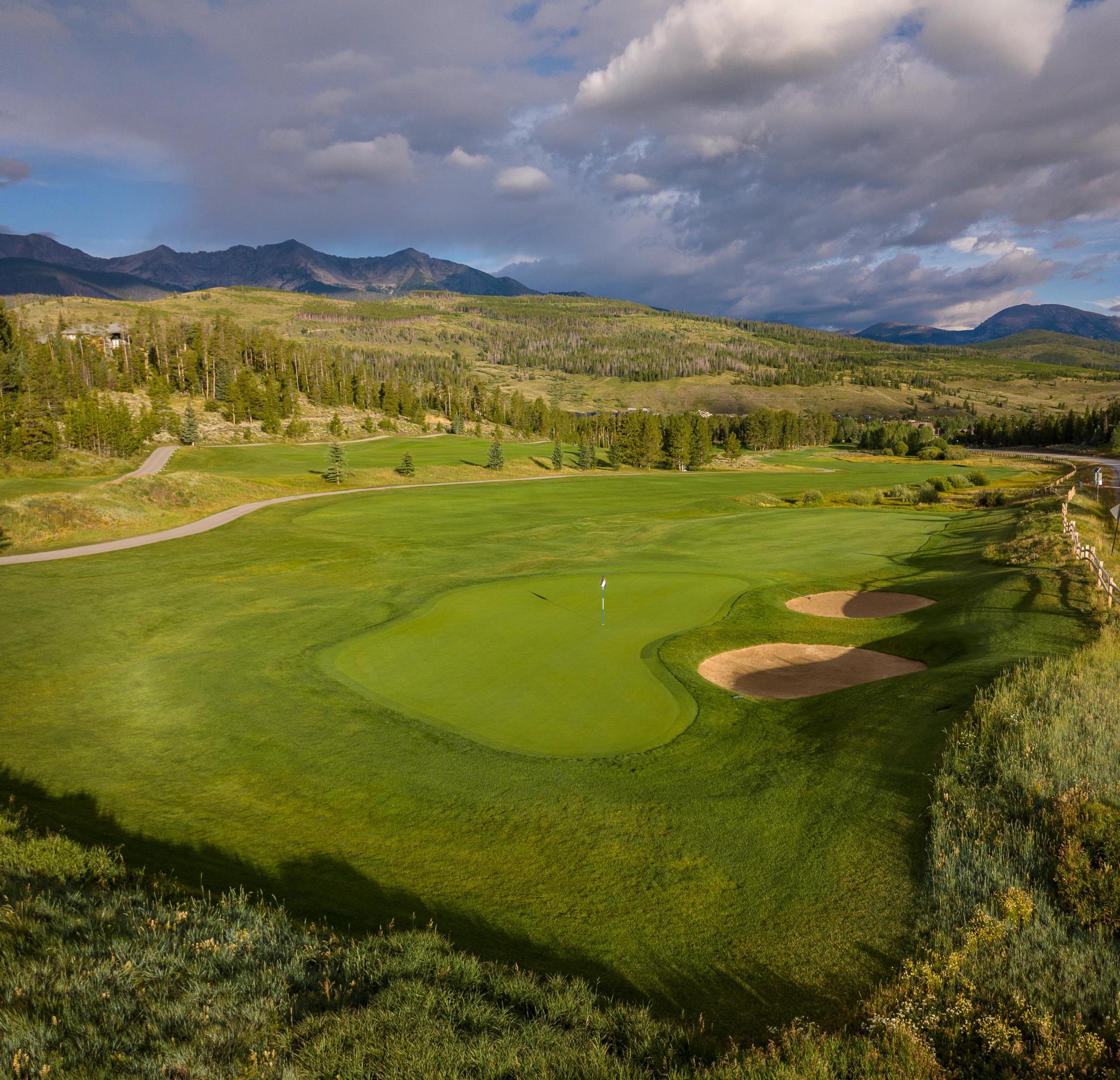
If length is the be-all, end-all in golf these days, would playing at high altitude make me a better golfer? I traveled to Wyoming and Colorado to find out.
 First, the facts. According to Titleist’s Principal Scientist, Steven Aoyama, thinner air located one mile above sea level adds six percent to the distance of one’s drive. (That’s an extra 15 yards on a 250-yard drive.) The distance is achieved through a lower lift rate, resulting in a flatter ball flight, which takes some getting used to. Shaping a shot is also harder.
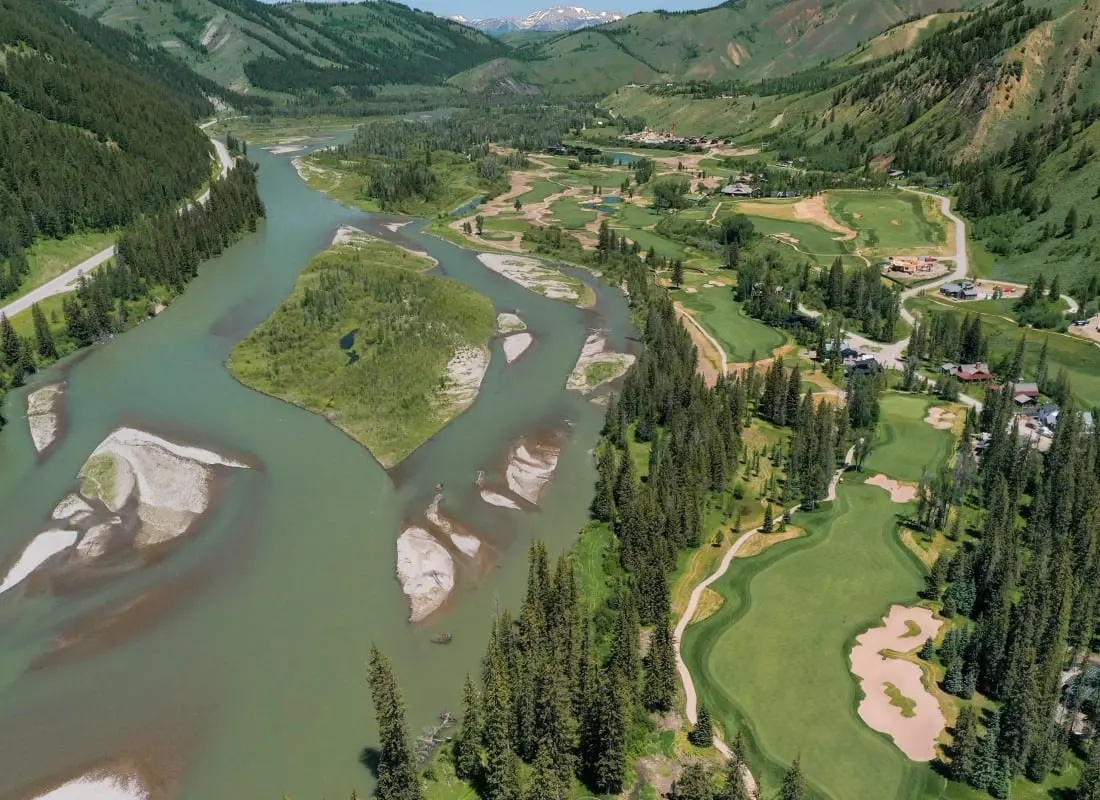
Infused with my almost seven percent solution, a sure lock to increase my length, I donned my deerstalker and traveled to Jackson Hole (Elev: 6,237 ft) to visit the Snake River Sporting Club. The formerly private vacation community debuted The Sylvan Lodge last summer, a boutique hotel that offers guests the opportunity to take advantage of horseback riding, fly fishing, shooting clays, and, yes, an outstanding Tom Weiskopf-designed championship golf course.
It shouldn’t take Dr. Watson to inform me that elementary factors beyond extended yardage exist at altitude; namely, the next morning’s brain burdens should one imbibe the previous night in spirits like local Wyoming Whisky or Snake River Brewing IPAs. Add in poor hydration, exacerbated by luxuriating among the rooftop hot tubs, and I find myself “stretching,” i.e. taking Tylenol at the first tee for far more than my stiff lower back.
Nothing clears the head like an opening drive debate, however, so I shake out the hop-webs and, trusting science, aim between the two fairway bunkers with plans to clear the right side with a 225-yard drive. My high is short-lived – I landed between the sandy depressions. The 299-yard second hole, a shorty that flows sharply downhill to a diabolical green with more bends than the adjacent Snake River, begs a “maybe, just maybe” drive, and I comply, disastrously as I roll into a punitive bunker.
This second hole exemplifies the front nine, a series of interesting holes shrouded by lodgepole pines, quaking aspen, and cottonwoods. I come away from two rounds feeling especially fond of the 145-yard par 3 fourth, not because of the subtle stream that slithers through, but due to the artisan well tucked inside an ancient miner’s shed along the cart path.
The yawning 592-yard par 5 seventh leaves the forest, the arboreal shroud removed as we head into the valley beneath the broad Wyoming sky. I know I should crave eagles when I can hit my drives farther, but I still prefer the osprey’s call, a guarantee that water, and possibly wetlands, exist to provide optimal Rocky Mountain bird sightings among the much rarer birdie attempts.
Speaking of taking flight, Weiskopf molds his design on several back nine holes with well-positioned water hazards that crimp one’s “Let ‘er rip to disappear into the thin air” strategy, placements that scrub the extra yards advantage out of the picture like a Soviet-era retouch.
These decisions are mere child’s play when compared with the club selection debates at the Jack Nicklaus-designed Breckenridge Golf Club (Elev: 9,300 ft), 27 holes that are laced with so many carries I start singing CSNY’s “Carry On,” or was it “Carry on my wayward” drive from Kansas? Though no hole is the same here, déjà vu is unavoidable on the Bear-Elk combo as I pull a long iron to attack three of the four 200-yard-plus par 3s without a bailout in sight, a feeling I can only describe as “helpless.”
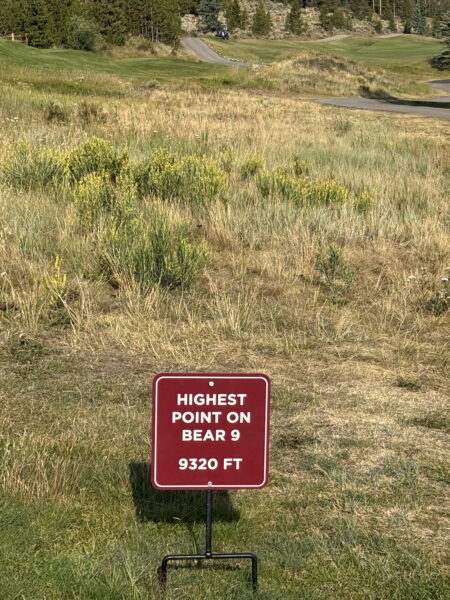
Built upon Buffalo Flats, a former miner tent encampment, the Bear nine lumbers through the valley with a furry rough beside the predatory “ball hunt unnecessary” tall grass. The Elk nine leaps into the hills, an entertaining alpine gait that ascends to 9,320 feet by the seventh tee. The 436-yd seventh descends toward a right turn through a narrow arboreal gap that leads over a gully to a deeply sloped back-to-front green. Like stepping off an MTA platform, if you don’t “mind the gap” with a drive exceeding 240 yards, you’ll likely face a layup a mere three subway cars in length.
It was on the Elk seventh where I identified the aesthetic paradox of playing high. I launched a huge (for me) 260+ drive toward the slope, but rather than soar majestically like a Cal Raleigh dinger, my ball cut a shallow arc, a big dumper of a line drive that demanded another five iron to clear the junk.
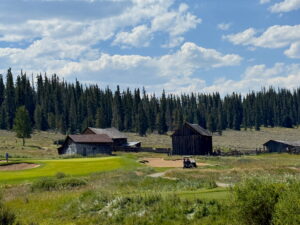
Driving from the peaks on Breckenridge reminded me how much I love alpine golf. I craved Robert Trent Jones Jr.’s Keystone Ranch Course (Elev: 9,173 feet), a track that climbs and falls repeatedly, but I’m happy to have played RTJ Jr.’s Ranch Course, a lovely valley design set upon two historic homestead ranch sites.
The Ranch is hardly devoid of elevation (it’s an RTJ Jr. track, after all), but the early, straight, tree-lined passages don’t presage the fun that awaits starting on the 411-yard fourth, where the twice-transected fairway sits below a hefty hill tee box. Like a falconer releasing the tresses, your ball can soar above the valley below via a decent drive. The 187-yard par 3 fifth, perched before a historic barn trio, frames the experience beautifully.
Water carries are commonplace on par 3s, but RTJ Jr. chose a different challenge, setting the ninth tee box above the lake with a pick-your-distance fairway seemingly far, far away. Lakeside decisions return on the home hole, another opportunity to select my slice of fairway with hopes my drive will fly like an eagle as my spirited love of this game carries me away upon the thin mountain air.


