Short(s) Game: Remember that time when Forrest Fezler wore shorts on the final hole of the 1983 U.S. Open? His son Jordan does
by Candy Puterbaugh
Outside Philadelphia’s historic city hall, among the sculptures and statues of the country’s famous historical people, among camera crews and a crowd, amateur golfer Jordan Fezler and his family recently viewed the unveiling of a statue of his famous father – wearing shorts.
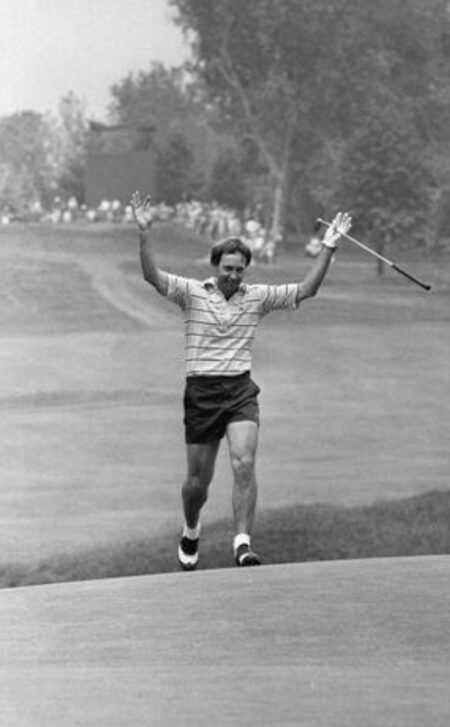
Yes, the late professional golfer Forrest Fezler is remembered for being a PGA Tour winner and golf course designer, but maybe even more so for wearing shorts on the 72nd hole of the 1983 U.S. Open, held that year at Oakmont Country Club in western Pennsylvania.
“My dad wore shorts during practice rounds of that year’s U.S. Open, and a reporter asked him why,” said Jordan. “‘Because it’s hot!’ he answered. Questioned again after making Saturday’s cut, dad challenged the reporter to find a rule against it – which he couldn’t. So, after finishing the 17th hole in the final round, my dad told his playing partner to take his time, and then slipped into a porta potty and changed into shorts for his final hole, becoming the only golfer to play in a U.S. Open or PGA Tour tournament wearing shorts.”
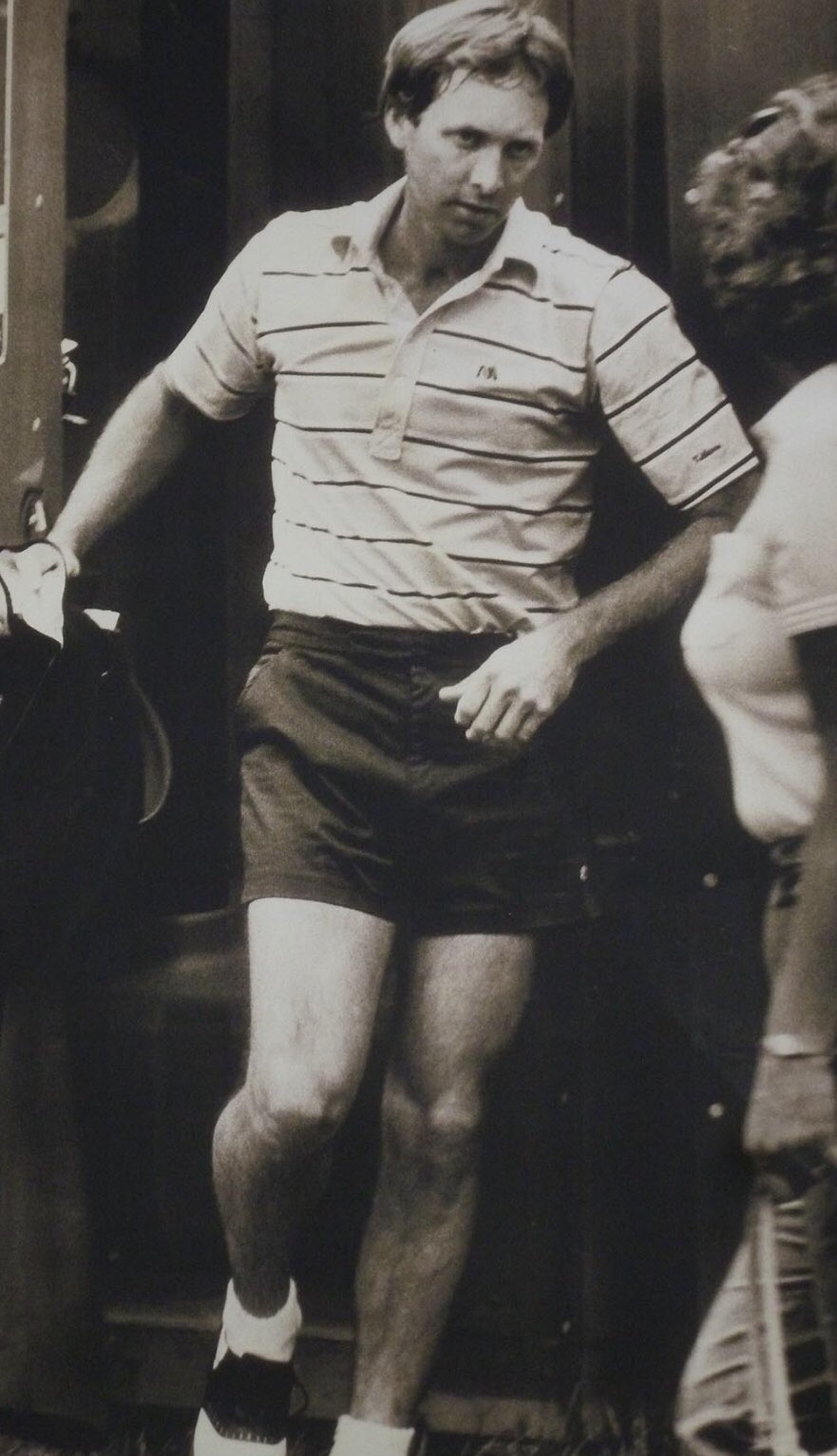
After the round, Forrest signed his scorecard quickly after being warned, “You’d better get out of here – they’re coming for you!” The following day an official cited a no-shorts rule. Those famous Forrest Fezler shorts sparked controversy then – and an Adidas ad campaign today.
“Adidas contacted my family about the launching of their new golf shorts line,” Jordan said. “They’re using my dad’s likeness in a marketing campaign around the story, and in mid-May flew my family, along with my sister’s family, to the PGA Championship at Aronimink Golf Club near Philadelphia.”
His sister Brooke added, “What I appreciated most was that Adidas didn’t just honor ‘the moment’ or simply launch a shorts campaign. They took great care to honor the story, my dad, and what that moment stood for. They celebrated his playful rebelliousness in thoughtful ways.”
During the statue’s unveiling, there were golf shirt patches with his likeness that were given away, as well as ball markers and trading cards.
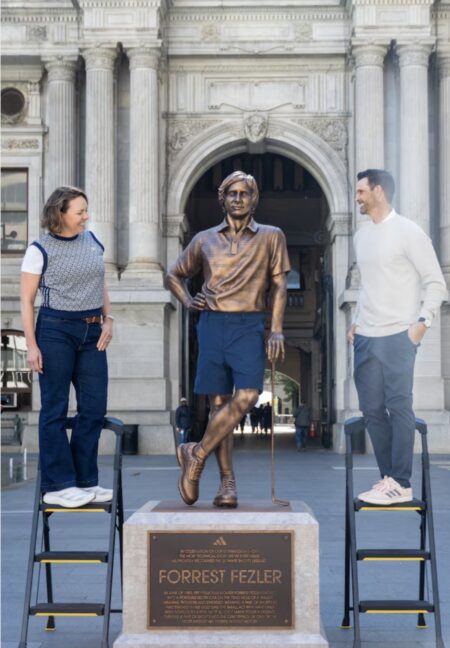
The statue’s unveiling took place at popular Dilworth Park on the west side of city hall. The statue was later relocated to Tobacco Road Golf Club in North Carolina, one of the many courses built by Forrest Fezler with architect Mike Strantz. “Dad was usually head of construction,” Jordan said. “Mike drew the holes and dad executed them. They were unique in golf course architecture because they were at the course every single day.”
Forrest’s older brother Phil taught him golf. With four siblings whose mother worked two jobs, they were often on their own. At age 12, Forrest hopped the fence to play at San Jose (Calif.) Country Club, where the pro recognized his talent and offered him honorary membership. He played and won daily, in the morning with older players betting lunch, and in the afternoon betting dinner. His first under-par round came at age 13. He won everything he entered, and went on tour after two years of college, and was named PGA Tour Rookie of the Year in 1973 at age 23.
“He was a stud at a young age,” said Jordan. “He was quiet, funny, easy to talk to, and super fun to hang out with. Dad was an introvert, and didn’t like large groups of people. He was a straight-edged kind of guy.”
Forrest played on the PGA Tour from 1972 to 1983, with 30 top-10 finishes, including eight runners-up. His career year was 1974, in which he won the Southern Open and finished second to Hale Irwin at the U.S. Open. A bad wrist injury in 1976 eventually ended his career. He passed away on December 21, 2018, at the age of 69 after a battle with brain cancer. Two months later, the PGA Tour made a major policy change, allowing players to wear shorts during practice and pro-am rounds.
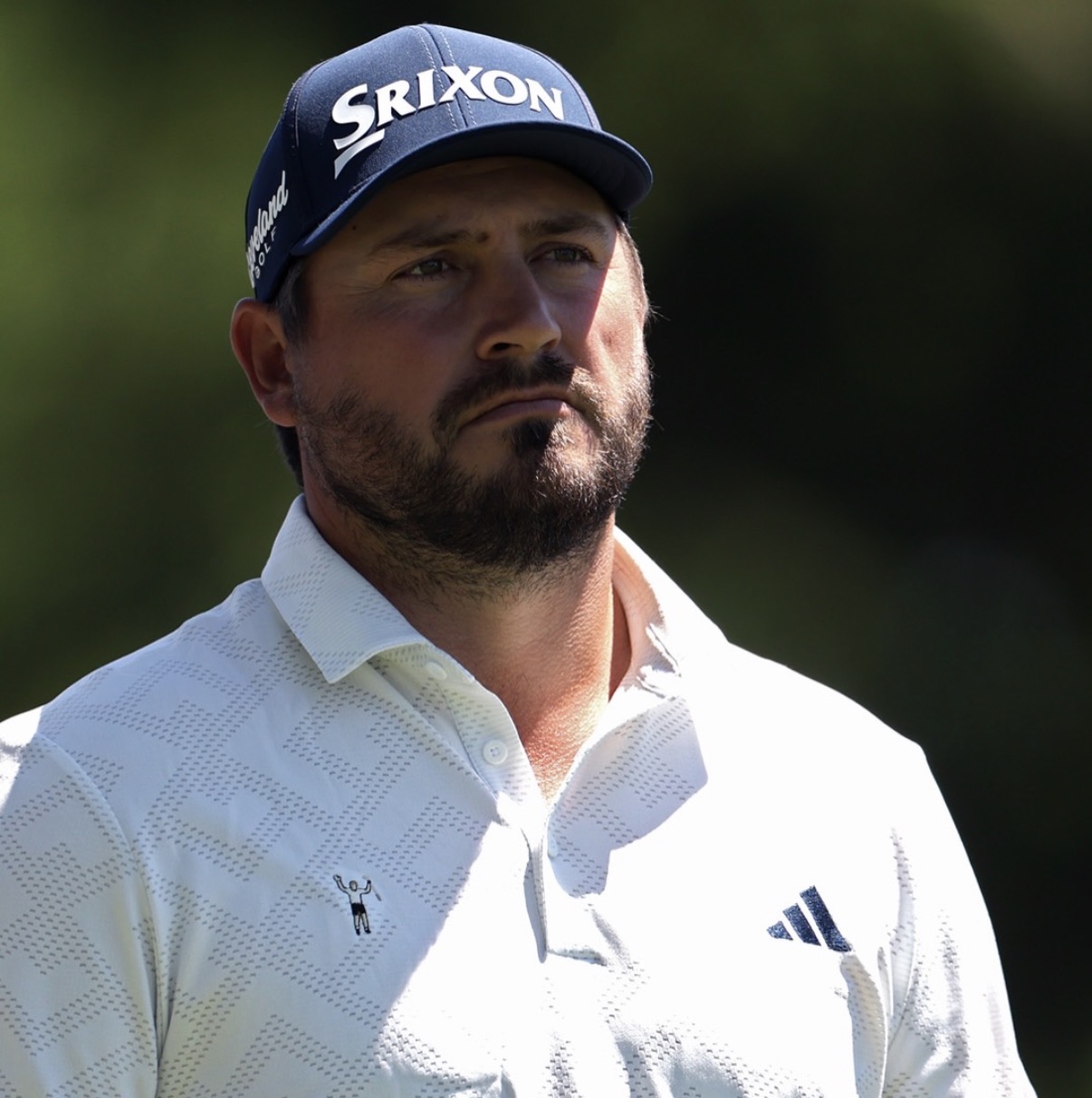
Jordan didn’t take up golf seriously until age 30. Growing up in Danville, California, he played a little. “My parents divorced when I was young, and my dad moved to the east coast so I only saw him occasionally,” he said. “We connected in my mid-20s and got close, spending a lot of time together. I lived in San Francisco near the Shore Course at the Monterey Peninsula Country Club that he built. Everyone has high expectations of my golf game because of dad. I tell them to lower their expectations!”
Jordan was captain of his high school basketball team, so started his season with the golf team late, not playing much. Majoring in journalism at the University of Oregon, he then played bass in a band, Audiodub, in San Francisco, traveling often and making four full-length albums. Bowing out of the band at age 30, Jordan needed a hobby so took up golf, playing at the city’s municipal course, Harding Park.
“Because of playing with my dad, I knew how to set up and swing,” Jordan said. “First I shot in the mid-80s but kept getting better. Dad coached me. I’d send him videos, and then call him after rounds.”
Jordan won the CUDD Masters Tournament Team Championship in 2022, 2024 and 2025, and also competes in many local qualifiers for national championships, currently playing to a handicap of +1.6. With an extensive medical sales background, today he’s a commercial real estate broker.
He and his wife Courtney met in college, moving from San Francisco to Portland 10 years ago. “We wanted to start a family, and Portland has a better cost of living. And Courtney said I could play golf all year in Portland.” They joined Columbia Edgewater Country Club.
With son Hudson, 9, daughter Hayes, 6, and a black lab named Larry, “It’s a bit of a scramble to get out to play golf,” Jordan said.
But memories of his famous father and six magical days In Philadelphia linger.
“While our dad daringly wore shorts that day, that moment felt true to who he was,” Brooke said. “He challenged expectations, brought a little humor and individuality into a very traditional space, and had the courage to do something authentic to him, leaving a bigger impact than he probably ever imagined. Impact doesn’t always come from grand gestures – sometimes it comes from one authentic decision, one courageous moment.”


